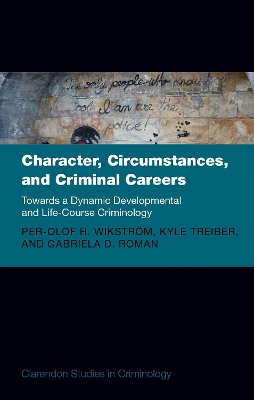
Character, Circumstances, and Criminal Careers
 -10%
portes grátis
-10%
portes grátis
Character, Circumstances, and Criminal Careers
Towards a Dynamic Developmental and Life-Course Criminology
Treiber, Prof Kyle; Wikstrom, Prof Per-Olof H.; Roman, Dr Gabriela
Oxford University Press
02/2024
624
Dura
Inglês
9780198865865
15 a 20 dias
Descrição não disponível.
Part 1: Explaining Crime Events and Criminal Careers: Situational Action Theory and It's Developmental Ecological Action Model
1: Towards A Dynamic Developmental and Life-Course Criminology
2: Explaining Crime Events and Criminal Careers: Situational Action Theory (SAT) And Its Developmental Ecological Action (DEA) Model
Part 2: Introducing PADS+: Research Design and Key Findings About Participants' Crime and Criminal Careers
3: The Peterborough Adolescent and Young Adult Developmental Study (PADS+): An Overview
4: Crime and Criminal Careers
5: Trajectories Of Crime
Part 3: The DEA Model: Testing the causes and drivers of criminal careers
6: Character and Crime Propensity
7: Criminogenic Circumstances and Exposure
8: The Age and Crime Distribution and its Explanation
9: Crime Propensity and Criminogenic Exposure: The Drivers of Crime Trajectories
Part 4: The DEA Model: Exploring the role of social contexts
10: Does Childhood Social Disadvantage and Social Adversity Set People on Particular Pathways in Crime?
11: Do Changing Connections to Key Social Institutions Influence Crime Propensities, Criminogenic Exposure, and Crime Involvement Through Adolescence and Into Early Adulthood?
12: Coda
Technical Appendix
1: Towards A Dynamic Developmental and Life-Course Criminology
2: Explaining Crime Events and Criminal Careers: Situational Action Theory (SAT) And Its Developmental Ecological Action (DEA) Model
Part 2: Introducing PADS+: Research Design and Key Findings About Participants' Crime and Criminal Careers
3: The Peterborough Adolescent and Young Adult Developmental Study (PADS+): An Overview
4: Crime and Criminal Careers
5: Trajectories Of Crime
Part 3: The DEA Model: Testing the causes and drivers of criminal careers
6: Character and Crime Propensity
7: Criminogenic Circumstances and Exposure
8: The Age and Crime Distribution and its Explanation
9: Crime Propensity and Criminogenic Exposure: The Drivers of Crime Trajectories
Part 4: The DEA Model: Exploring the role of social contexts
10: Does Childhood Social Disadvantage and Social Adversity Set People on Particular Pathways in Crime?
11: Do Changing Connections to Key Social Institutions Influence Crime Propensities, Criminogenic Exposure, and Crime Involvement Through Adolescence and Into Early Adulthood?
12: Coda
Technical Appendix
Este título pertence ao(s) assunto(s) indicados(s). Para ver outros títulos clique no assunto desejado.
Part 1: Explaining Crime Events and Criminal Careers: Situational Action Theory and It's Developmental Ecological Action Model
1: Towards A Dynamic Developmental and Life-Course Criminology
2: Explaining Crime Events and Criminal Careers: Situational Action Theory (SAT) And Its Developmental Ecological Action (DEA) Model
Part 2: Introducing PADS+: Research Design and Key Findings About Participants' Crime and Criminal Careers
3: The Peterborough Adolescent and Young Adult Developmental Study (PADS+): An Overview
4: Crime and Criminal Careers
5: Trajectories Of Crime
Part 3: The DEA Model: Testing the causes and drivers of criminal careers
6: Character and Crime Propensity
7: Criminogenic Circumstances and Exposure
8: The Age and Crime Distribution and its Explanation
9: Crime Propensity and Criminogenic Exposure: The Drivers of Crime Trajectories
Part 4: The DEA Model: Exploring the role of social contexts
10: Does Childhood Social Disadvantage and Social Adversity Set People on Particular Pathways in Crime?
11: Do Changing Connections to Key Social Institutions Influence Crime Propensities, Criminogenic Exposure, and Crime Involvement Through Adolescence and Into Early Adulthood?
12: Coda
Technical Appendix
1: Towards A Dynamic Developmental and Life-Course Criminology
2: Explaining Crime Events and Criminal Careers: Situational Action Theory (SAT) And Its Developmental Ecological Action (DEA) Model
Part 2: Introducing PADS+: Research Design and Key Findings About Participants' Crime and Criminal Careers
3: The Peterborough Adolescent and Young Adult Developmental Study (PADS+): An Overview
4: Crime and Criminal Careers
5: Trajectories Of Crime
Part 3: The DEA Model: Testing the causes and drivers of criminal careers
6: Character and Crime Propensity
7: Criminogenic Circumstances and Exposure
8: The Age and Crime Distribution and its Explanation
9: Crime Propensity and Criminogenic Exposure: The Drivers of Crime Trajectories
Part 4: The DEA Model: Exploring the role of social contexts
10: Does Childhood Social Disadvantage and Social Adversity Set People on Particular Pathways in Crime?
11: Do Changing Connections to Key Social Institutions Influence Crime Propensities, Criminogenic Exposure, and Crime Involvement Through Adolescence and Into Early Adulthood?
12: Coda
Technical Appendix
Este título pertence ao(s) assunto(s) indicados(s). Para ver outros títulos clique no assunto desejado.